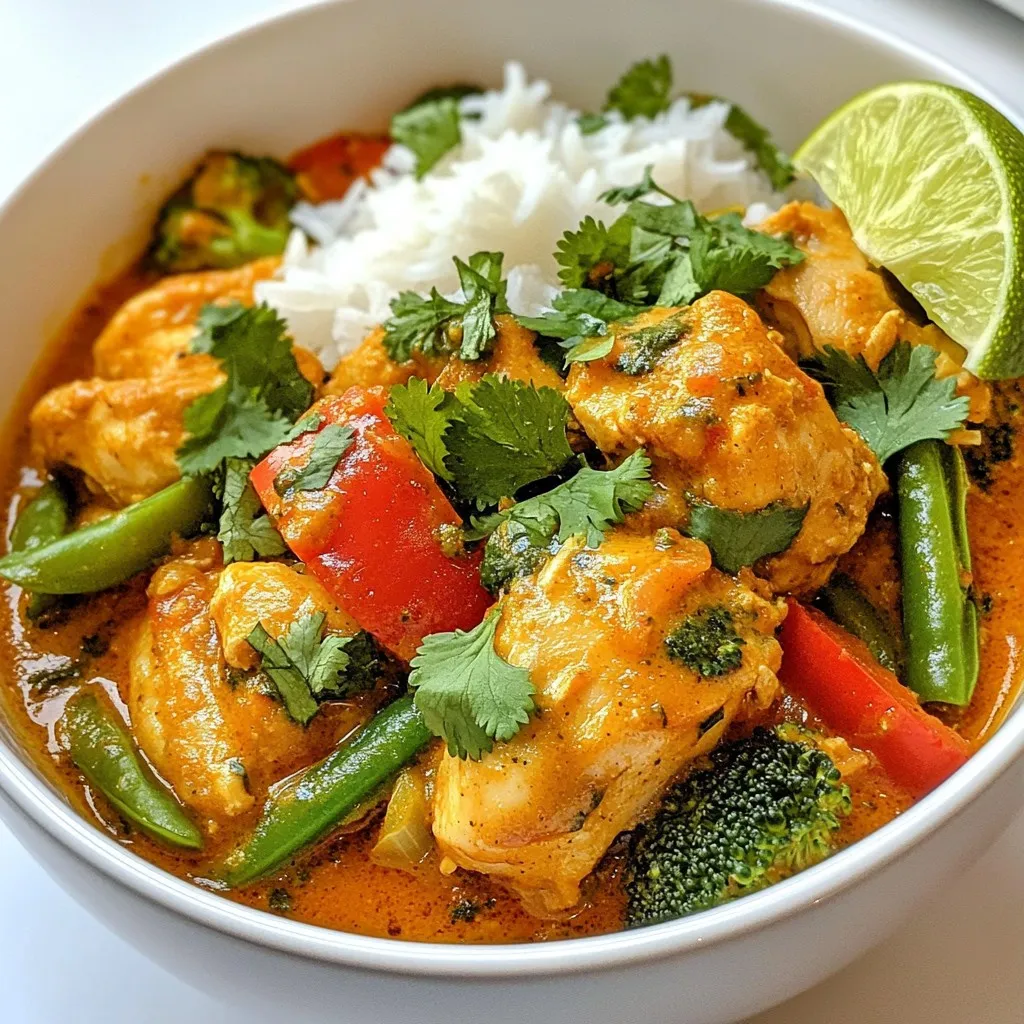
Welcome to my kitchen where today, we’re diving into a delightful dish: Min Coconut Chicken Curry! This recipe is not only flavorful but also simple to make. With tender chicken, creamy coconut milk, and vibrant veggies, you’ll love every bite. Whether you’re a busy parent or a novice cook, this curry will impress everyone at the table. Let’s explore how to create this tasty meal together!
Why I Love This Recipe
- Bold Flavors: This curry bursts with vibrant flavors from the coconut milk and red curry paste, making every bite a tropical delight.
- Quick and Easy: In just 30 minutes, you can have a delicious and comforting meal ready for your family.
- Nutritious Ingredients: Packed with fresh vegetables like broccoli and snap peas, this dish is not only tasty but also healthy.
- Versatile Dish: This recipe can easily be adapted for vegetarians or served with different sides to suit any preference.
Ingredients
Main Ingredients
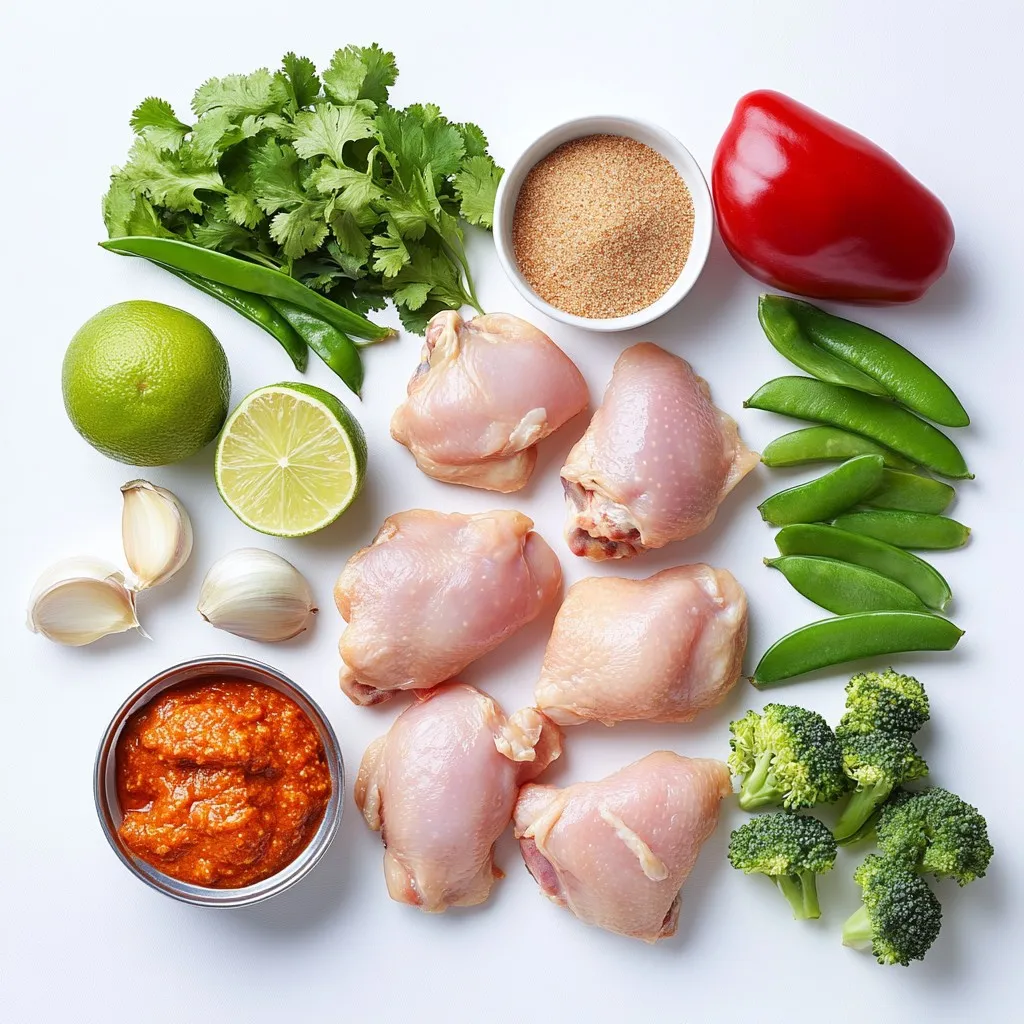
– 1 lb boneless chicken thighs, cut into bite-sized pieces
– 1 can coconut milk
– 2 tablespoons red curry paste
These main ingredients form the heart of the Min Coconut Chicken Curry. The boneless chicken thighs provide tender protein. Coconut milk adds creaminess and rich flavor. Red curry paste brings heat and depth to the dish.
Aromatics and Vegetables
– 1 tablespoon fresh ginger, grated
– 4 cloves garlic, minced
– 1 medium onion, finely chopped
– 1 bell pepper (red or yellow), sliced
– 1 cup broccoli florets
– 1 cup snap peas
Aromatics like ginger and garlic create a strong base. They add warmth and brightness. Onions and bell peppers give sweetness and crunch. Broccoli and snap peas add color and nutrition. Together, they make the curry vibrant and fresh.
Seasonings and Garnishes
– 2 tablespoons fish sauce (or soy sauce for a vegetarian option)
– 1 tablespoon brown sugar
– Juice of 1 lime
– Fresh cilantro, for garnish
– Salt and pepper to taste
Fish sauce or soy sauce adds umami and saltiness. Brown sugar balances the heat with sweetness. Fresh lime juice brightens the dish. Cilantro offers a fresh finish. Season to taste with salt and pepper to enhance all flavors.
Step-by-Step Instructions
Preparing the Base
To start, heat 2 tablespoons of vegetable oil in a large skillet over medium heat. Add 1 finely chopped onion, 4 minced garlic cloves, and 1 tablespoon of grated fresh ginger. Sauté these aromatics for about 2-3 minutes. You want them to smell amazing and turn slightly soft.
Next, stir in 2 tablespoons of red curry paste. Cook this mixture for another minute. This step helps the flavors grow deeper and richer. The vibrant color of the paste will fill your kitchen with a warm, inviting scent.
Cooking the Chicken
Now it’s time to add the star of the dish: 1 pound of boneless chicken thighs, cut into bite-sized pieces. Season the chicken with salt and pepper. Cook it for about 5-7 minutes. You want the chicken to brown nicely on all sides. This adds a great flavor to the dish.
Once the chicken is browned, pour in 1 can of coconut milk. Stir well to combine. Add 2 tablespoons of fish sauce and 1 tablespoon of brown sugar to the mix. Bring this delightful blend to a gentle simmer.
Finalizing the Dish
After the curry simmers, it’s time for the veggies. Add 1 sliced bell pepper, 1 cup of broccoli florets, and 1 cup of snap peas. Cook everything for another 5-7 minutes. You want the vegetables to be tender but still bright and fresh.
Finally, squeeze the juice of 1 lime into the curry. Taste and adjust seasoning if needed. This adds a lovely zing! Remove the skillet from heat and garnish the dish with fresh cilantro. This will make your dish look beautiful and fragrant before serving.
Tips & Tricks
Enhancing Flavor
To spice up your Min Coconut Chicken Curry, try adding more red curry paste. You can also use fresh herbs like basil or mint for a twist. If you want a milder curry, use less curry paste or add more coconut milk.
For dietary needs, you can swap chicken thighs for tofu or chickpeas. This keeps the dish hearty and tasty. Use low-sodium soy sauce instead of fish sauce for a vegetarian option.
Perfect Cooking Method
Use a large skillet or a heavy pot for cooking. A nonstick skillet helps prevent sticking and makes cleanup easier. The right pan helps to get a good sear on the chicken.
Simmering is key to making the flavors blend well. It allows the chicken to soak up the coconut milk and spices. Keep it on low heat so the curry does not burn.
Presentation Suggestions
For a beautiful presentation, serve the curry over jasmine rice or quinoa. This adds a nice texture and flavor. A bed of rice or quinoa makes the dish look inviting.
Garnish with fresh cilantro for color. You can also add lime wedges on the side for a fresh kick. These small touches make your dish pop and look fancy!
Pro Tips
- Ingredient Freshness: Always use fresh vegetables and herbs for the best flavor in your curry. Fresh cilantro and lime juice will brighten the dish significantly.
- Adjusting Spice Level: If you prefer a spicier curry, add more red curry paste or include sliced fresh chili peppers. Adjust according to your taste!
- Marinating Chicken: For deeper flavor, marinate the chicken pieces in lime juice, salt, and a bit of curry paste for 30 minutes before cooking.
- Serving Suggestions: Pair your curry with jasmine rice, quinoa, or even cauliflower rice for a low-carb option. Lime wedges enhance the overall taste.
Variations
Vegetarian/Vegan Option
You can easily make this dish vegetarian or vegan. Instead of chicken, use tofu or chickpeas. These options add protein and texture. If you choose tofu, press it first to remove extra moisture. This helps it absorb the curry flavors better. Use soy sauce instead of fish sauce to keep it plant-based. Coconut milk remains a great base for rich flavor.
Regional Adaptations
Spice things up by adding local spices. Use curry leaves or turmeric for a unique twist. You can also try adding seasonal vegetables. Zucchini or sweet potatoes work well. They add great texture and nutrients. Adjust the cooking time based on the veggies you choose. This keeps everything tender and vibrant.
Spice Level Adjustments
Want more heat? You can easily customize the spice level. Add sliced fresh chilies or a sprinkle of cayenne pepper. For a milder option, use less red curry paste. Always taste your curry as you go. This way, you can find the right balance of flavors. Adding a squeeze of lime can also brighten the dish, even with heat.
Storage Info
Refrigeration Guidelines
To store leftovers of your Min Coconut Chicken Curry, place the dish in an airtight container. This keeps the curry fresh and prevents it from absorbing other odors in your fridge. You can store it for about 3 to 4 days. After that, the flavors might fade, and the chicken may become less safe to eat.
Freezing Tips
For longer storage, you can freeze the curry. First, let it cool completely. Then, transfer it to a freezer-safe container or bag. Make sure to leave some space at the top, as the curry will expand when frozen. You can freeze it for up to 3 months. When you’re ready to eat, thaw it in the fridge overnight or use the microwave.
Reheating Techniques
To reheat your Min Coconut Chicken Curry, use a pot on the stove or a microwave. If using the stove, heat it on low to avoid burning. Stir often for even heating. If you use the microwave, heat it in short intervals, stirring in between. This helps keep the flavors fresh. Taste and adjust seasoning if needed before serving.
FAQs
What can I serve with Min Coconut Chicken Curry?
You can serve Min Coconut Chicken Curry with several tasty sides. Here are some great options:
– Jasmine rice
– Quinoa
– Naan bread
– Steamed rice
– Fresh salad
For drinks, consider these choices:
– Iced tea
– Coconut water
– Light beer
– Sparkling water with lime
– White wine, like Sauvignon Blanc
How can I make this recipe spicier?
If you want extra heat, here are some tips:
– Add diced fresh chilies, like jalapeños or Thai birds-eye.
– Stir in red pepper flakes.
– Use a spicier curry paste.
You can also try these chili additions:
– Sriracha sauce for a tangy kick.
– Chili oil for a savory touch.
– A dash of cayenne pepper for heat.
Can I use canned vegetables?
Yes, you can use canned vegetables. However, they may change the dish’s texture and flavor. Fresh veggies are crisper. Canned veggies are softer and may be more salty.
The best types of canned vegetables to use include:
– Canned bamboo shoots
– Canned water chestnuts
– Canned green beans
Just rinse them well to reduce extra salt.
This post covers a simple and tasty recipe for Min Coconut Chicken Curry. We explored the key ingredients, from chicken thighs to red curry paste. You learned how to prepare, cook, and serve the dish.
I shared tips to enhance flavor and offered variations to meet dietary needs. Remember, cooking can be fun and creative. Experiment with flavors, and make this dish your own. Enjoy your curry adventur